
THE HERON POST presents NEWS
April 19, 2026 | Greektown, Chicago
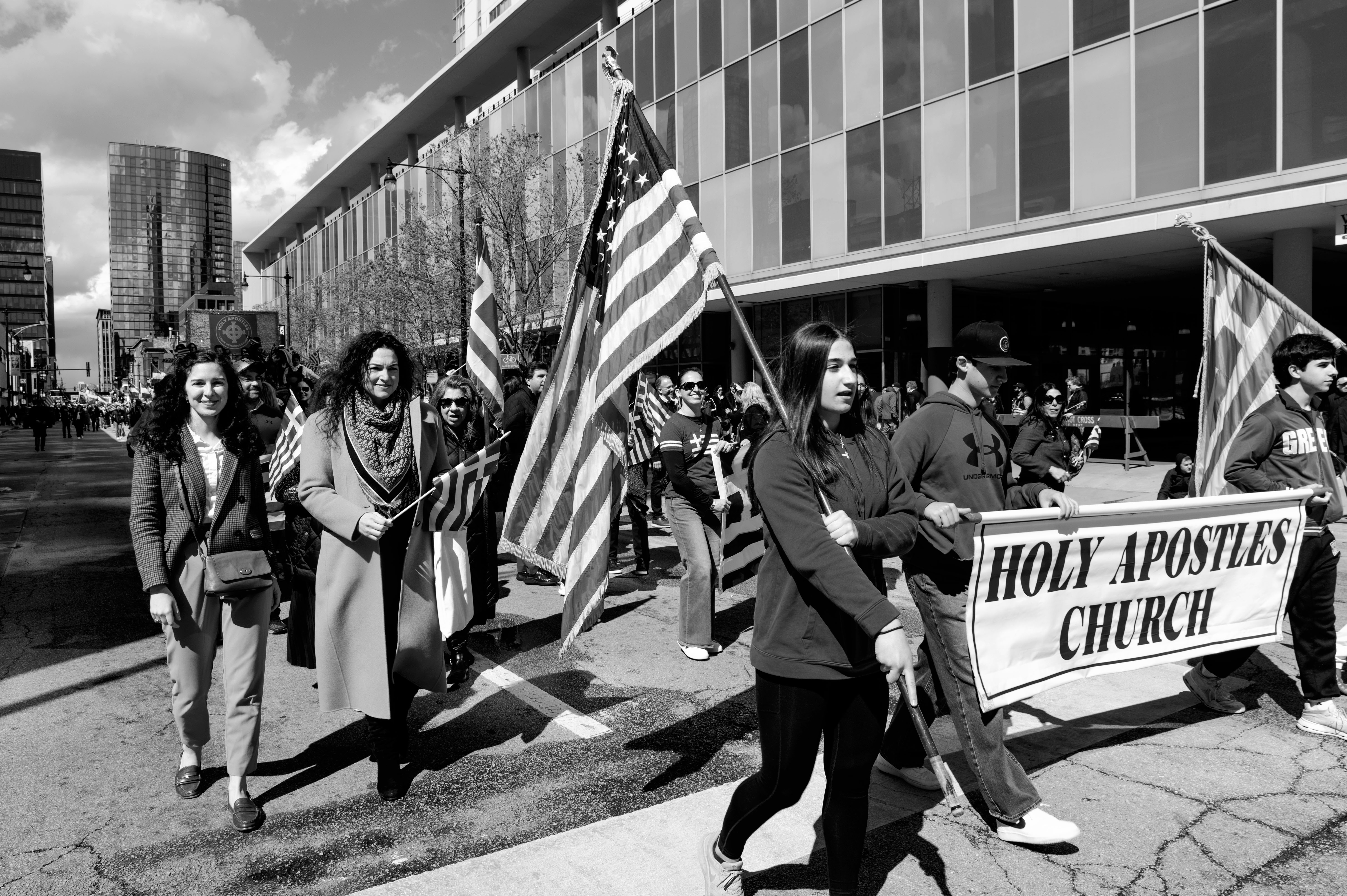
They came from Athens—soldiers who stand guard at the Tomb of the Unknown Soldier 24/7, who raise and lower the Greek flag at the Acropolis, who draw more than 1,000 visitors daily to Syntagma Square just to witness them. On April 19, 2026, the Evzones marched in Chicago's Greektown for the first time in nearly a decade, and the crowd that lined the sidewalks understood immediately: this was not an ordinary Greek parade.
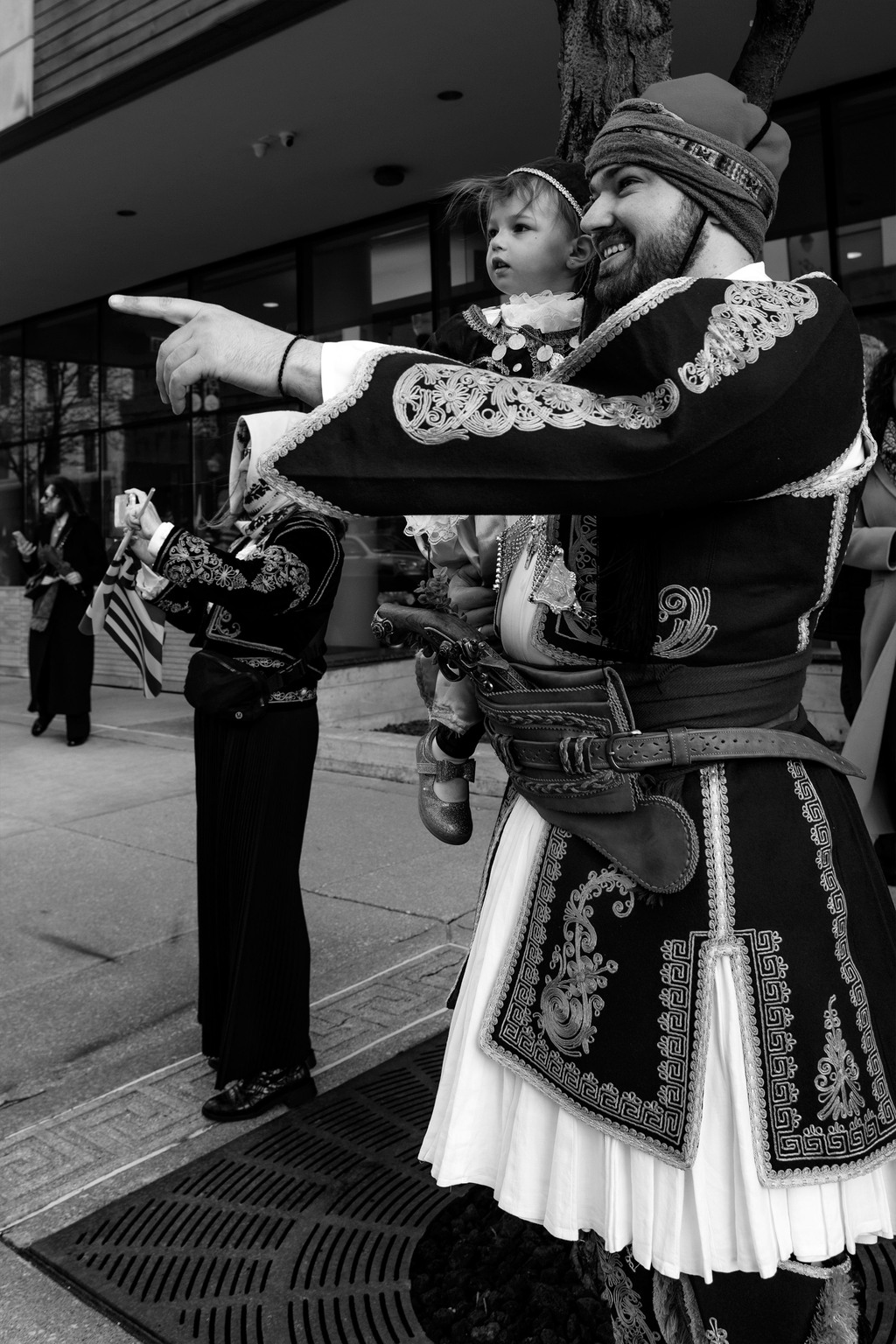
It was the 206th anniversary of the Greek declaration of independence—the moment, in 1821, when Greek revolutionaries struck against the Ottoman Turkish empire and ignited a flame of liberty that spread far beyond the Aegean. Chicago has been honoring that moment since 1964. And on this Sunday, honoring it felt less like commemoration and more like continuation.
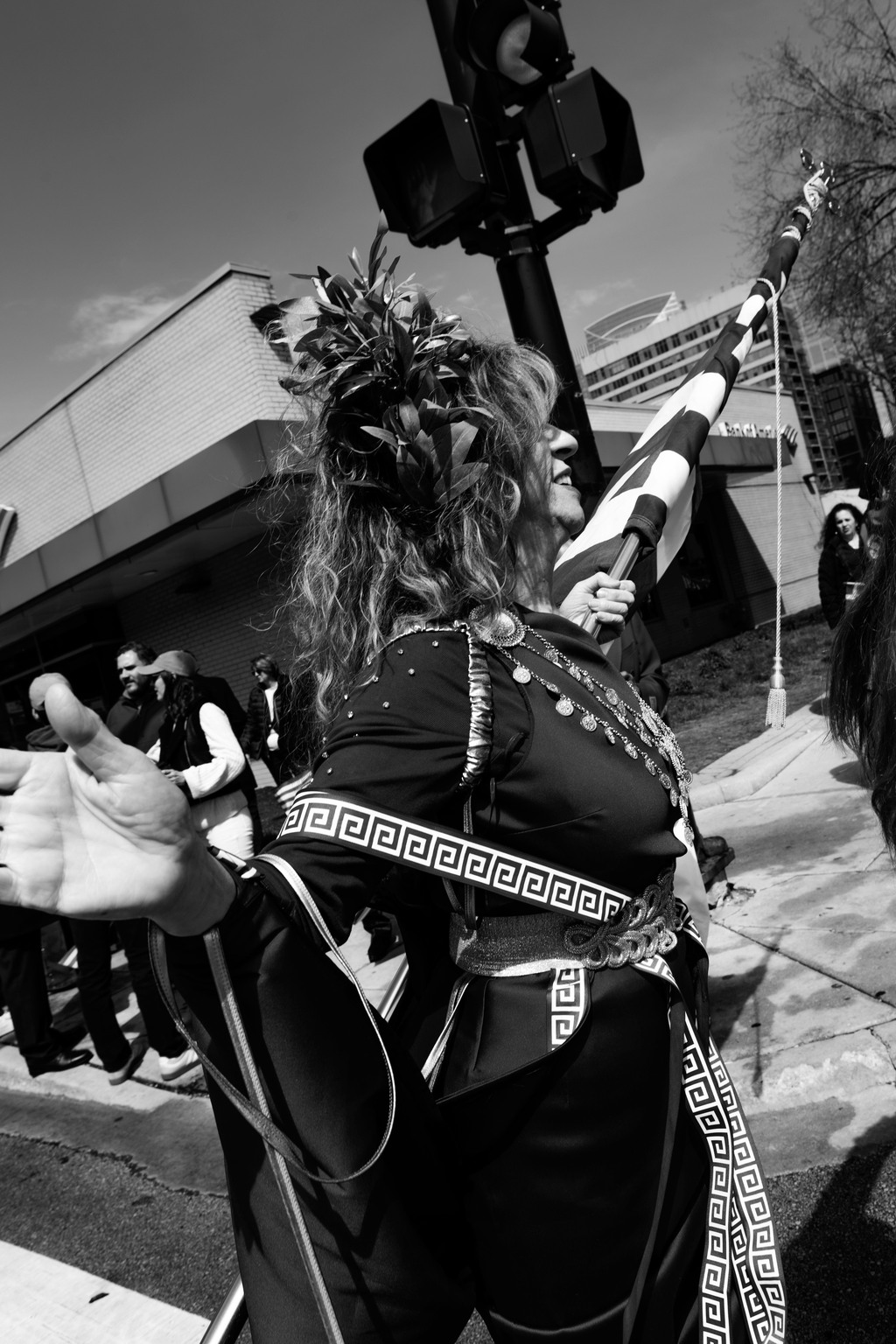
Their uniforms, inspired by the dress of 19th-century Greek independence fighters, moved through the streets to warm and sustained applause. For many in the crowd, it was a living reminder of historical continuity and national identity—proof that what happened in 1821 is not sealed behind glass.
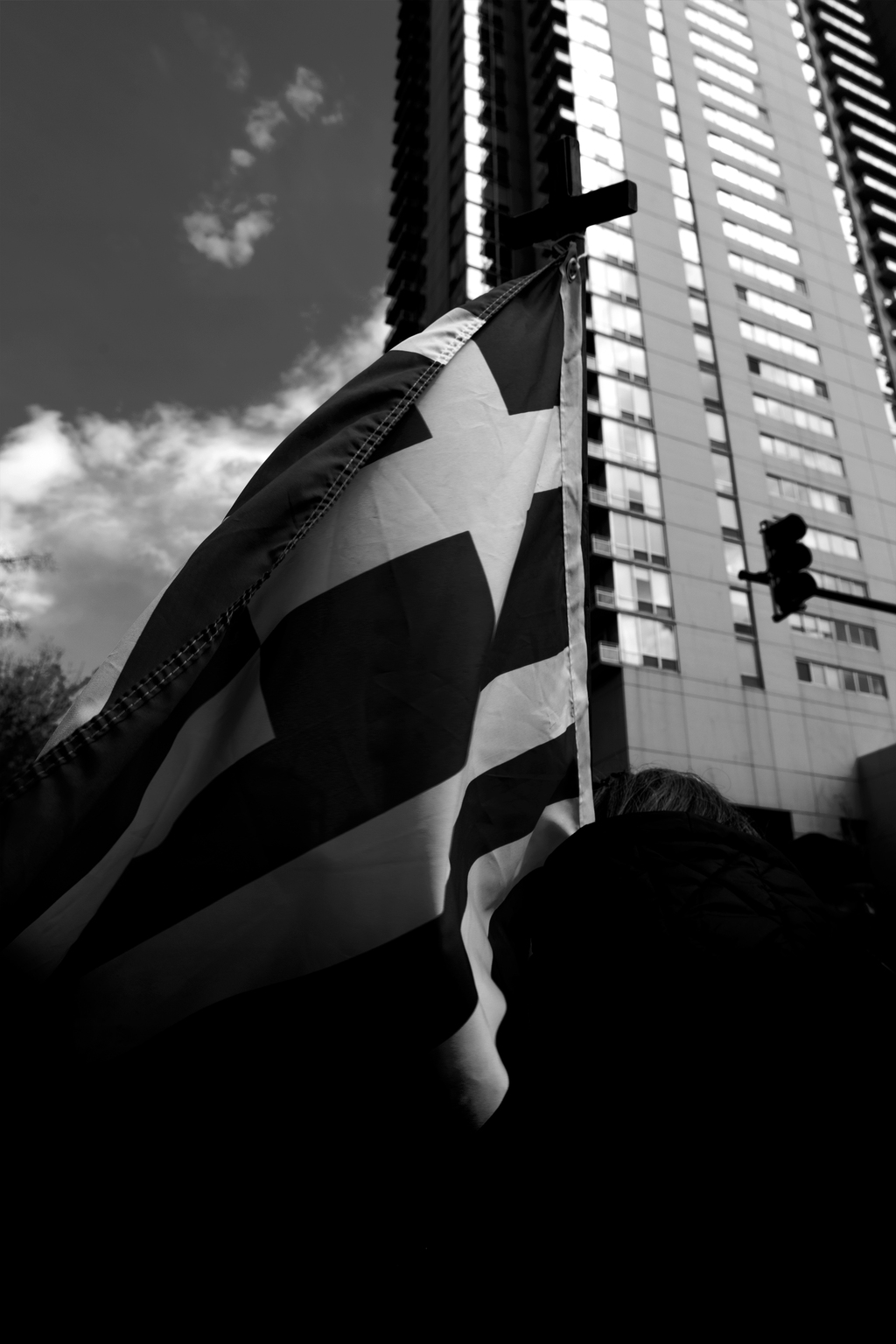
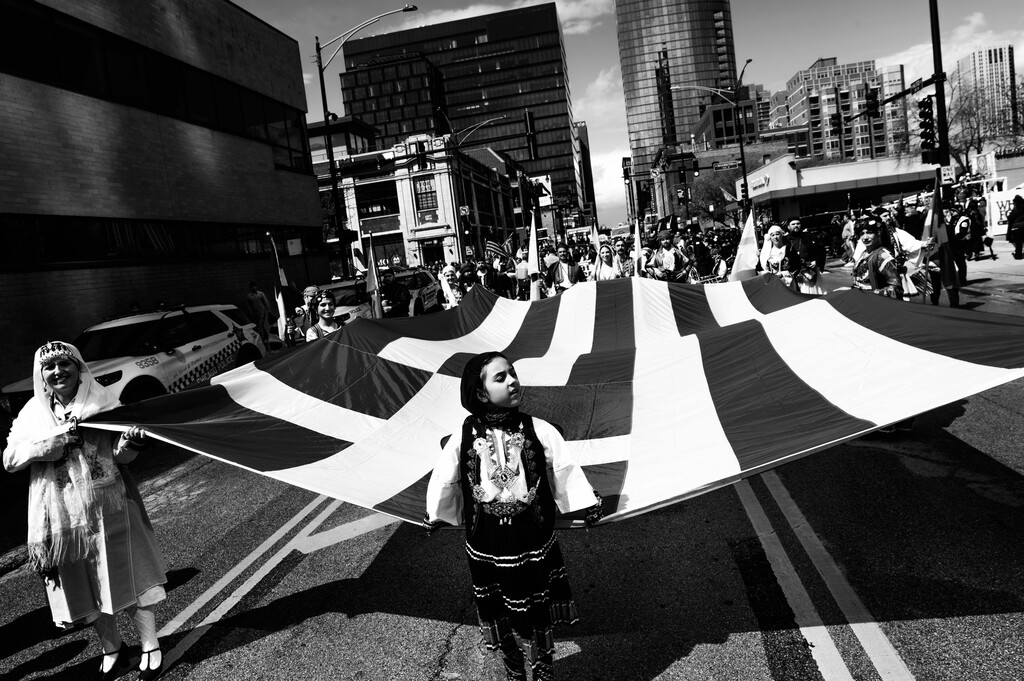
Zoe Koultourides, School Director of Holy Apostles Hellenic Academy, captured the spirit of the day: “We march not merely to mark a date, but to follow in the footsteps of those who chose Ελευθερία ή Θάνατος — Freedom or Death — honoring the heroes of 1821.” The phrase became the defining motto of the Greek War of Independence, reflecting the revolutionaries’ resolve that liberation from Ottoman rule would come at any cost, even life itself. It remains Greece’s national motto today, and the nine stripes of the Greek flag are often said to represent its nine syllables—E-lef-the-ri-a-i-tha-na-tos—linking national identity to the words that once rallied a revolution.
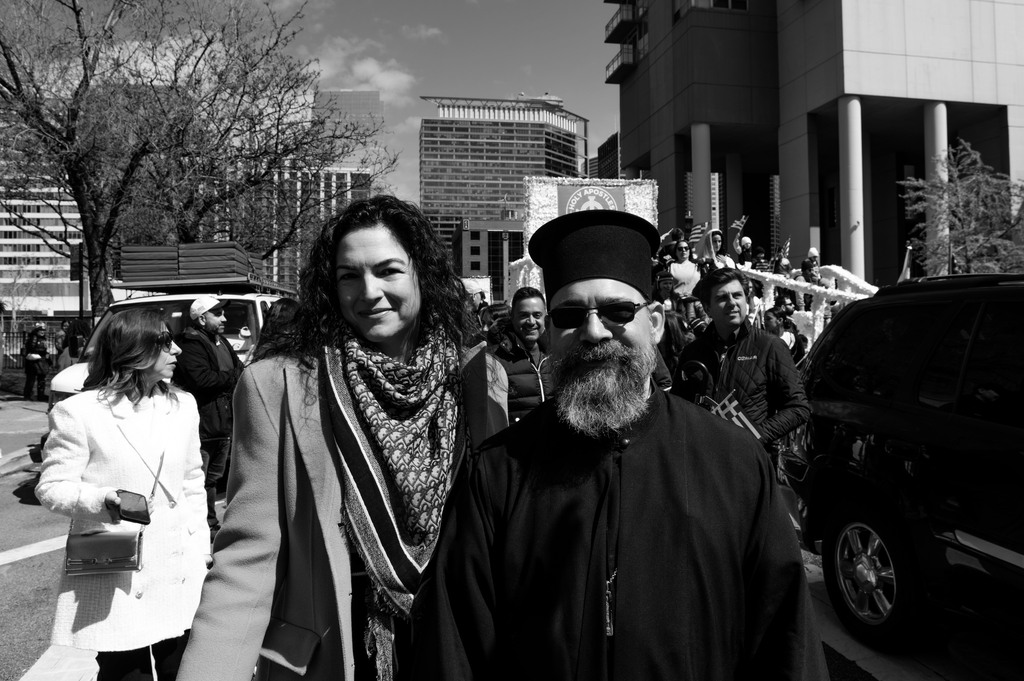
That connection between past and present continues inside National Hellenic Museum, where exhibitions like Gather Together by Diane Alexander White document decades of Chicago’s cultural parades—including Greek Independence Day—while Storytelling in Cloth and Light pairs traditional textiles with photography to connect personal memory with shared heritage.
Ariana Koultourides, Textile Designer at Crate & Barrel HQ, joined the parade. “I absolutely loved attending the Greek Independence Day Parade for the first time!” She said, “After seeing the traditional Greek march in Athens during my first trip to Greece, it was so exciting to see them again here in my hometown in Chicago. My favorite part of the day was visiting the Hellenic Museum where I got to view historical photos and authentic textiles from Greek history.”
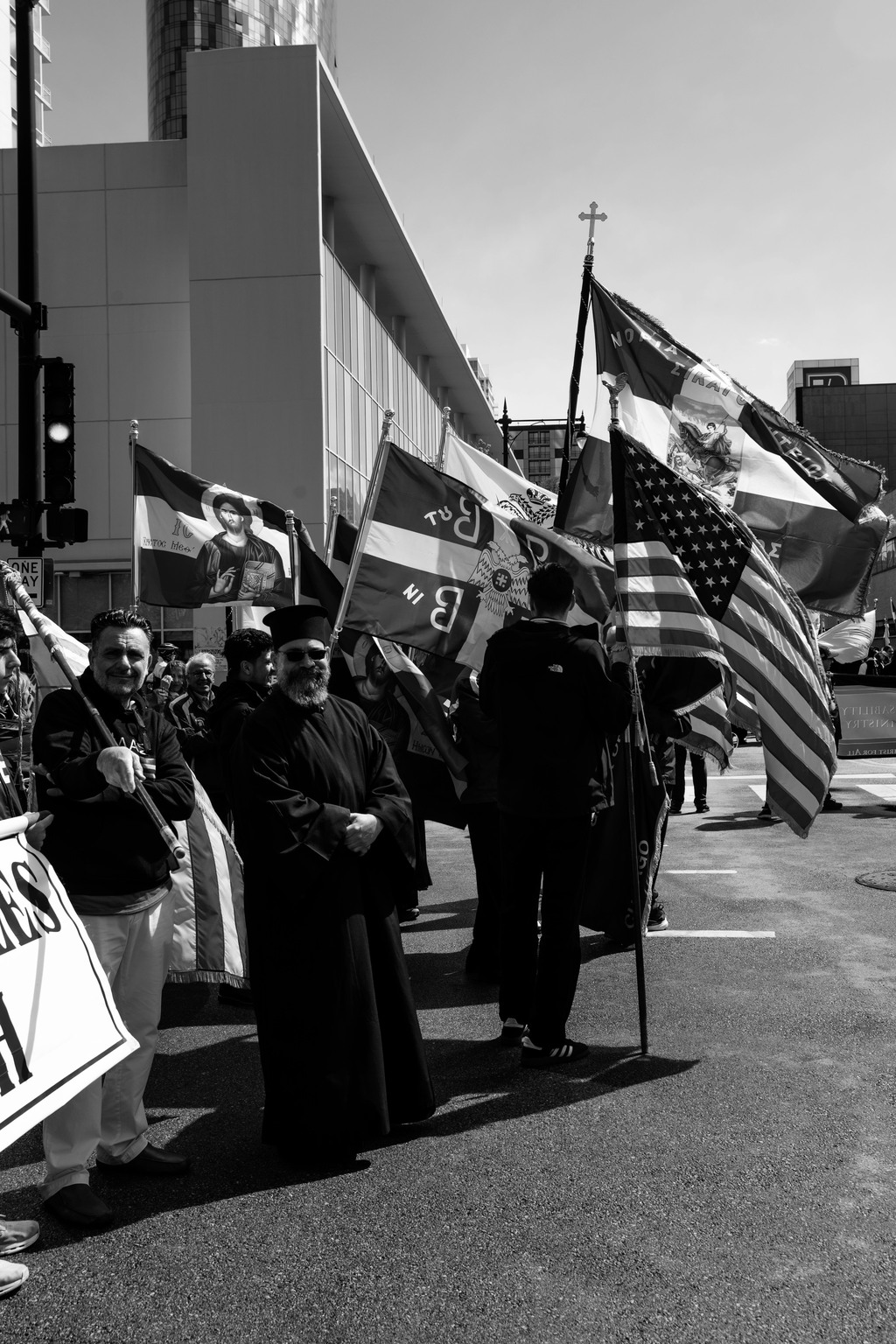
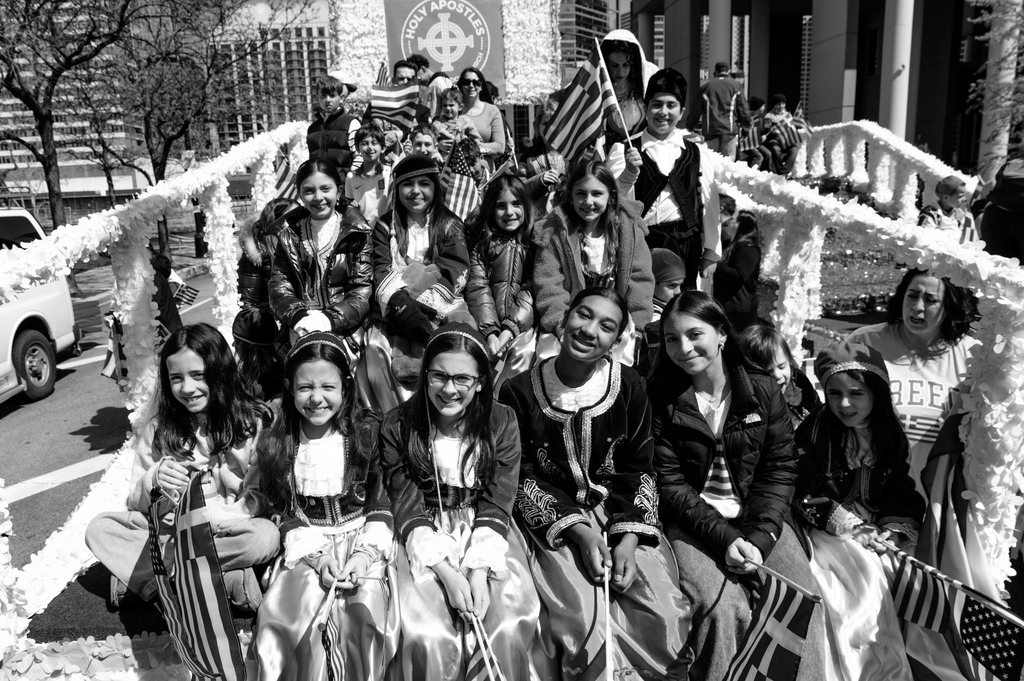
Presented by the Federation of Hellenic American Organizations of Illinois (ENOSIS) and supported by Greektown Special Service Area #16, the parade stepped off along South Halsted Street, a strip that has anchored Chicago's Greek community for more than six decades. Floats and marchers representing churches and organizations from across the region filled the street with color, music, and movement. Traditional costumes caught the afternoon light. Dance troupes performed for crowds that spilled onto sidewalks, children perched on shoulders, Greek and American flags raised high.
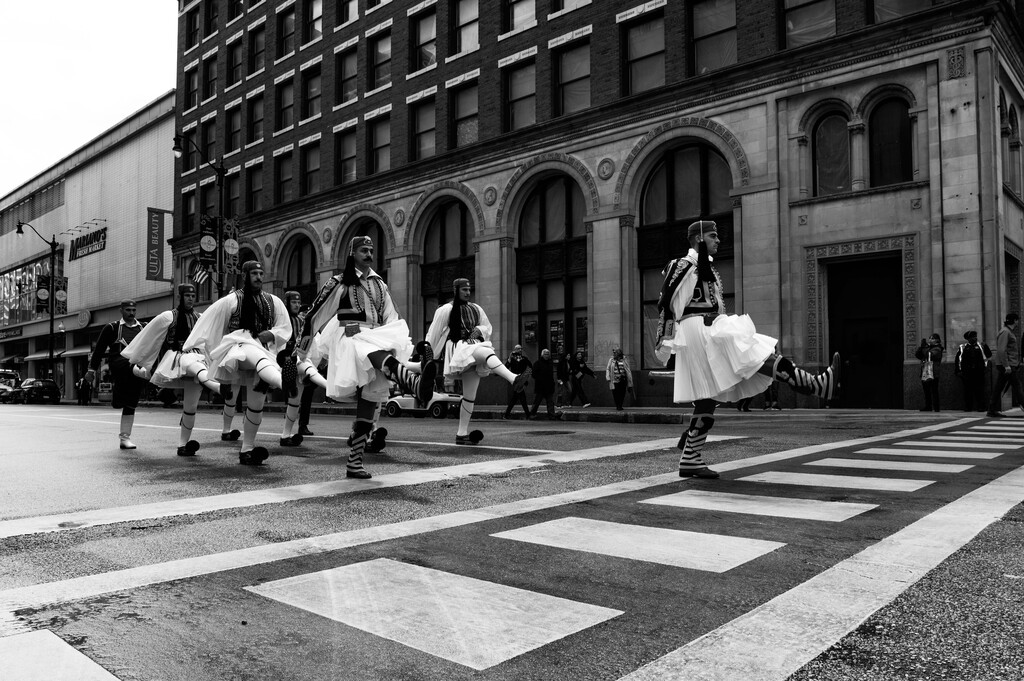
Walking behind the Evzones was a delegation that reflected both Hellenic pride and civic life in Chicago: Greece's Minister of Culture Lina Mendoni, Deputy Minister of Education Kostas Vlasis, Consul General Emmanuel Koubarakis, Metropolitan Nathanael of Chicago, and Cook County Circuit Court Clerk Mariyana Spyropoulos. Their presence said something important: this parade is not merely a cultural performance. It is a sustained act of memory, governance, and community—a declaration, renewed every April, that freedom is worth celebrating and worth protecting.
Before the parade, the Greektown Agora came alive along Elysian Field at the corner of Halsted and Van Buren Streets, hosting vendors of Greek art, jewelry, and gifts. Just like in ancient Greece, the agora became the center of civic and social life.
Chicago does this well: it takes the traditions of its communities and gives them room to breathe, room to grow, room to mean something new each year. The Greek Independence Day Parade is not a relic. It is a living thing—shaped by the hands that built Greektown, the children who watched from their parents' shoulders, and the soldiers from Athens who flew across an ocean to march down Halsted Street and remind everyone why 1821 still matters in 2026.
Follow Holy Apostles Hellenic Academy for more events.