
THE HERON POST presents THE ARTS
June 2026 | Michigan Avenue, Chicago
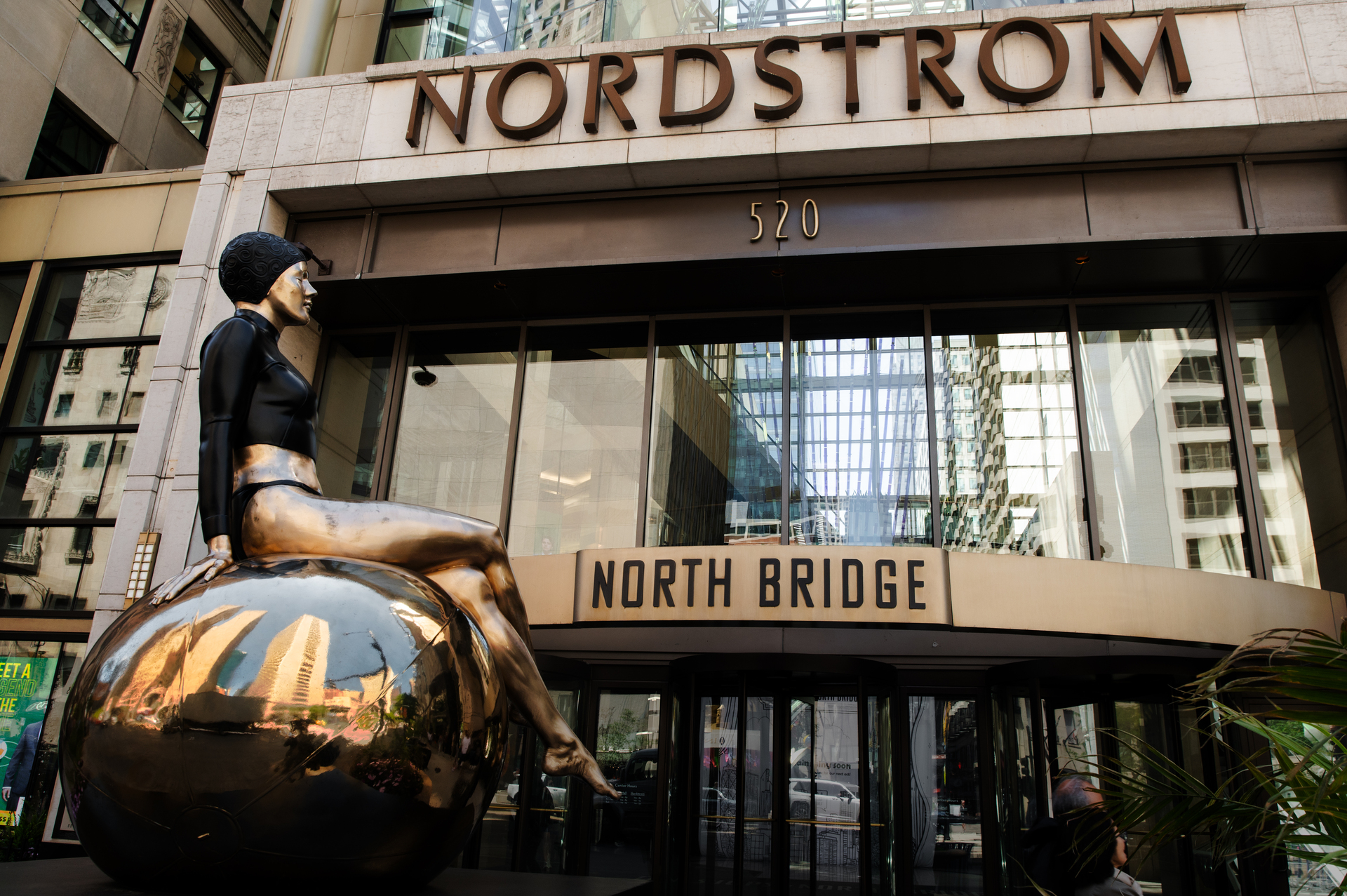
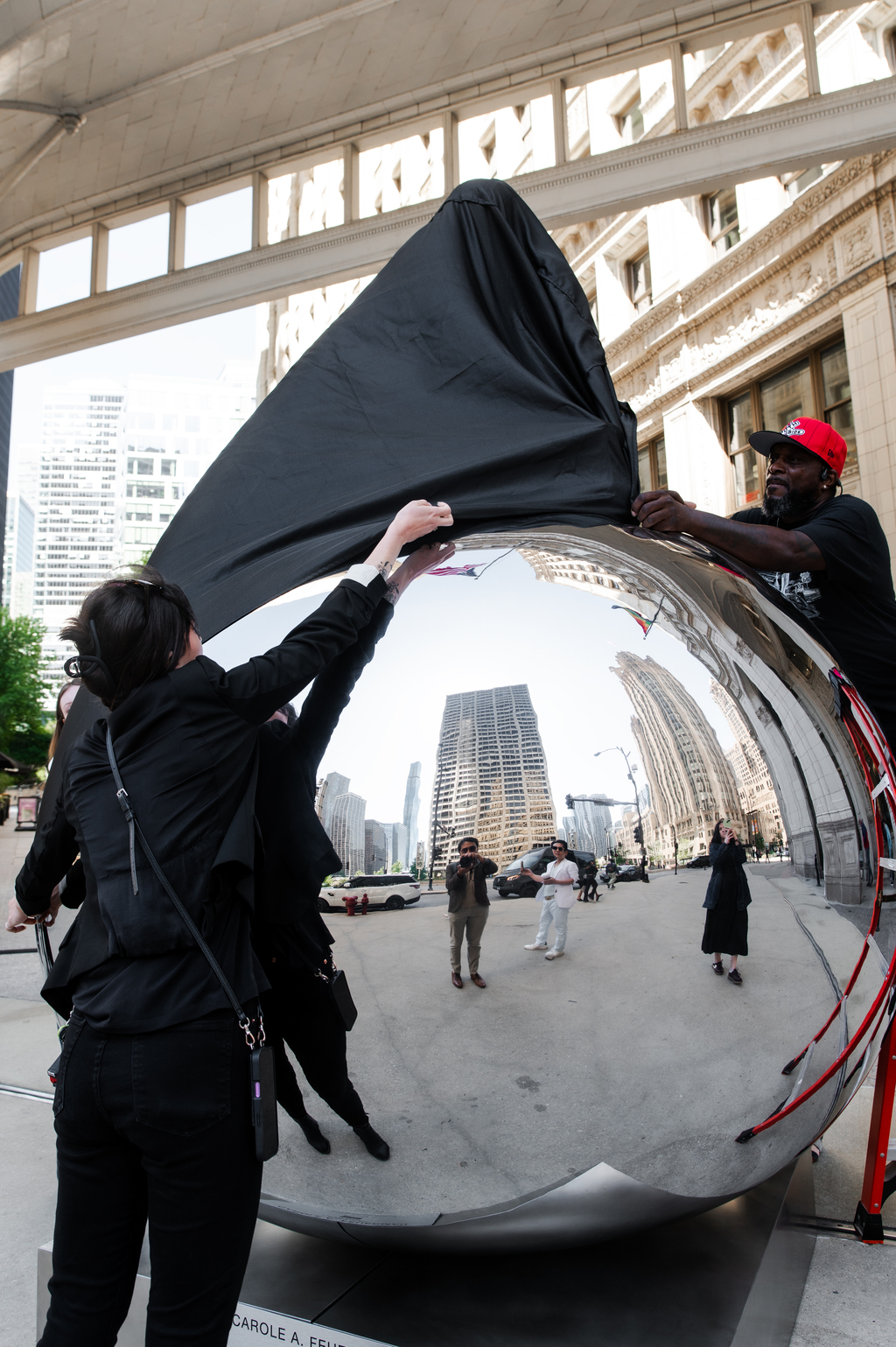
They stand in wet silence—eyes closed, skin rendered so precisely you half-expect an exhale of breath. On June 2, 2026, sculptor Carole Feuerman unveiled ten monumental figures along Michigan Avenue, and the crowd gathered at the Wrigley Building understood immediately: this was not an ordinary morning on the Magnificent Mile.
Artist Ada Da Silva, who has followed Feuerman's career with deep admiration, captures what makes that presence so rare: "Carole's work has shown the world that sculpture can be both powerful and deeply human. Her dedication, vision, and courage have elevated the field of sculpture and inspired artists across generations."
Among those gathered at the ribbon cutting, Alderman Brendan Reilly spoke first. "What an incredible compliment this will be in the visitor experience this summer," he said—a sentiment the morning seemed to confirm in real time, crowds already forming, tilting their heads, reaching for their phones, and reaching to touch the sculptures.
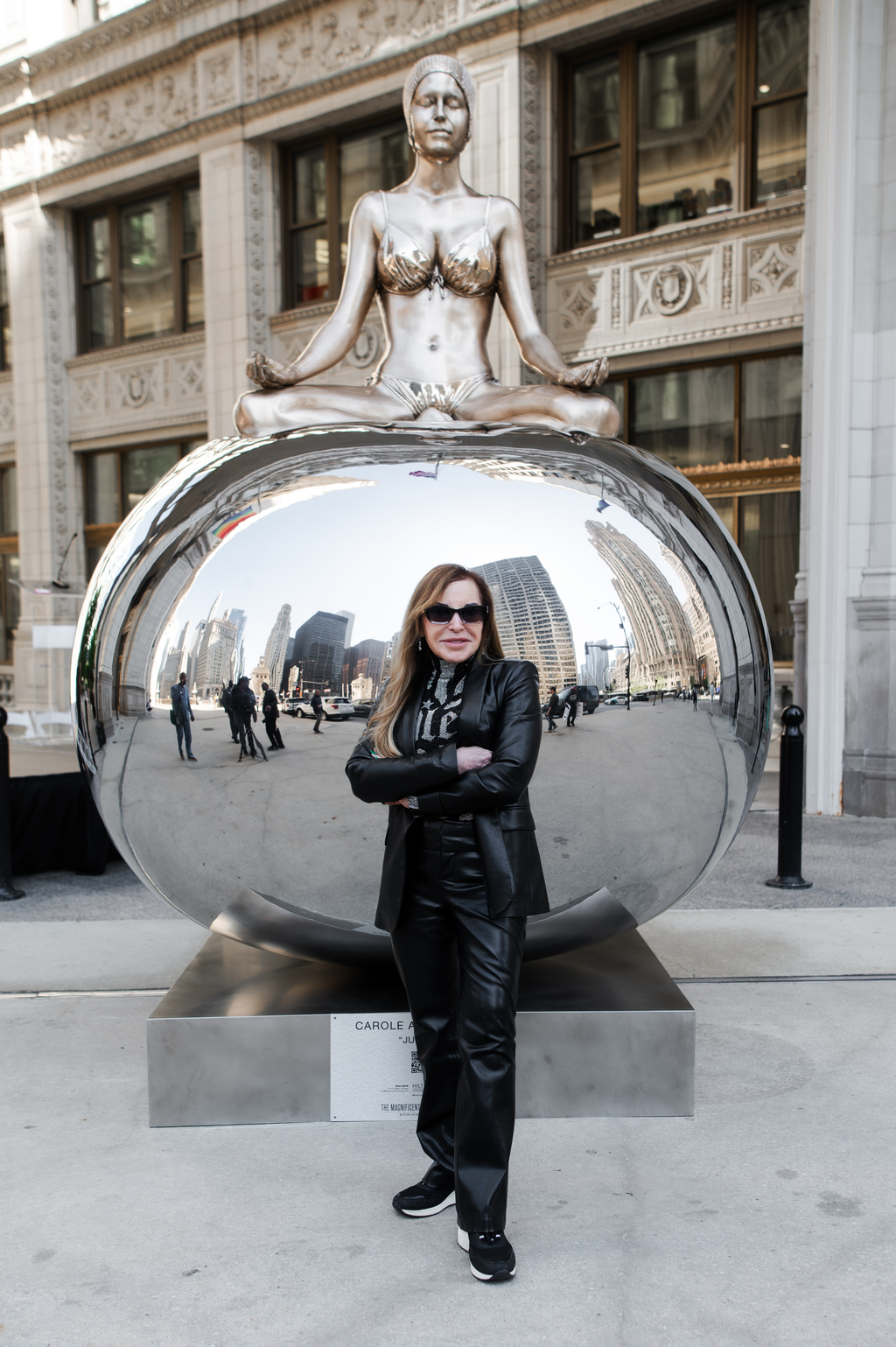
Carole Feuerman
Alderman Brian Hopkins has lived with Michigan Avenue his whole civic life—literally. "This tradition began almost 30 years ago," he said. "I remember it well. I lived on Michigan Avenue at the time." Over those decades, the boulevard has quietly become one of the most visited outdoor galleries in the country. "We had the famous Cows on Parade installation, which really kind of started this idea that public art should be placed in the most accessible, prominent location for citizens, residents, and tourists alike."
State Representative Kimberly Du Buclet has spent the past year making that case in rooms where it matters. A vocal champion of Chicago's cultural identity, she has pushed consistently for the kinds of investments that make a city not just functional, but alive. Standing on Michigan Avenue that morning, she framed the installation in terms both practical and visionary. "People choose to visit and choose to live in places based on the quality of life, and public art is part of that equation," she said. "Placing Monuments of Stillness here—ten sculptures—is exactly the kind of bold investment that draws visitors, activates our streets, and keeps Chicago competitive."
Feuerman, born in New York in 1945, has spent decades perfecting a practice that sits at an uncanny threshold. Her swimmer figures are executed with obsessive precision—surface finishing that mimics the sheen of wet skin, a sculptural weight that is both intimate and monumental. They have appeared at the Metropolitan Museum of Art, the Smithsonian National Portrait Gallery, the State Hermitage Museum in St. Petersburg, and Palazzo Strozzi in Florence. Former President Bill Clinton owns one. So does Andrea Bocelli. This year, the International Sculpture Center awarded her its Lifetime Achievement Award.
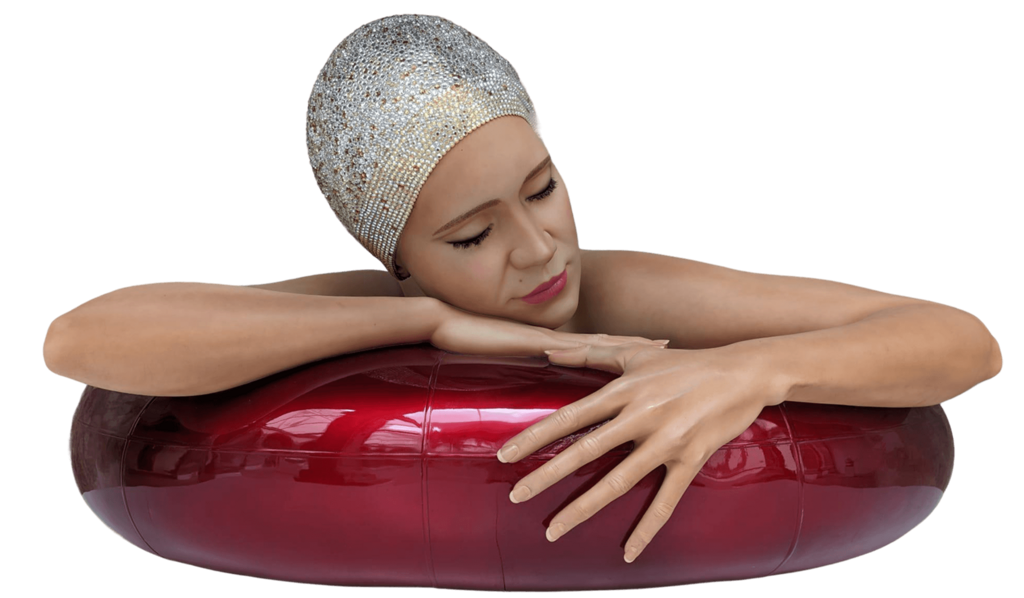
Her figures do not perform. They float, they breathe, they occupy space with a quiet authority that asks the people walking past to slow down—which, on Michigan Avenue, is its own kind of radical act. It is an impulse Feuerman traces directly to Chicago's relationship with water. "Water is life," she said at the opening. "It sustains us, connects us, and reminds us that we're part of something larger than ourselves." For a city built on the edge of one of the world's great lakes, the swimmers do not feel imported. They feel at home.
That quality—the way her work reaches across the boundary between object and observer—has not gone unnoticed by fellow artists. Da Silva put it simply: "As a sculptor, I admire Carole Feuerman's extraordinary ability to bring stillness, emotion, and humanity into monumental works of art. Art has the power to create connection, healing, and lasting impact in the world."
The ten sculptures stretch across one of Chicago's most storied corridors: from the Wrigley Building past the Tribune Tower, Neiman Marcus, Water Tower Place, and down to Oak Street. Presented by Hilton Contemporary, the exhibition runs through November 2026, after which it travels to Rodeo Drive in Beverly Hills. A companion solo show is on view at Hilton Contemporary's River North location.
It is Feuerman's first public installation in Chicago. Given how naturally her swimmers inhabit the boulevard—already drawing crowds within the first hour of the opening—it feels less like a show and more like a part of the city, as natural on Michigan Avenue as the architecture that frames it.
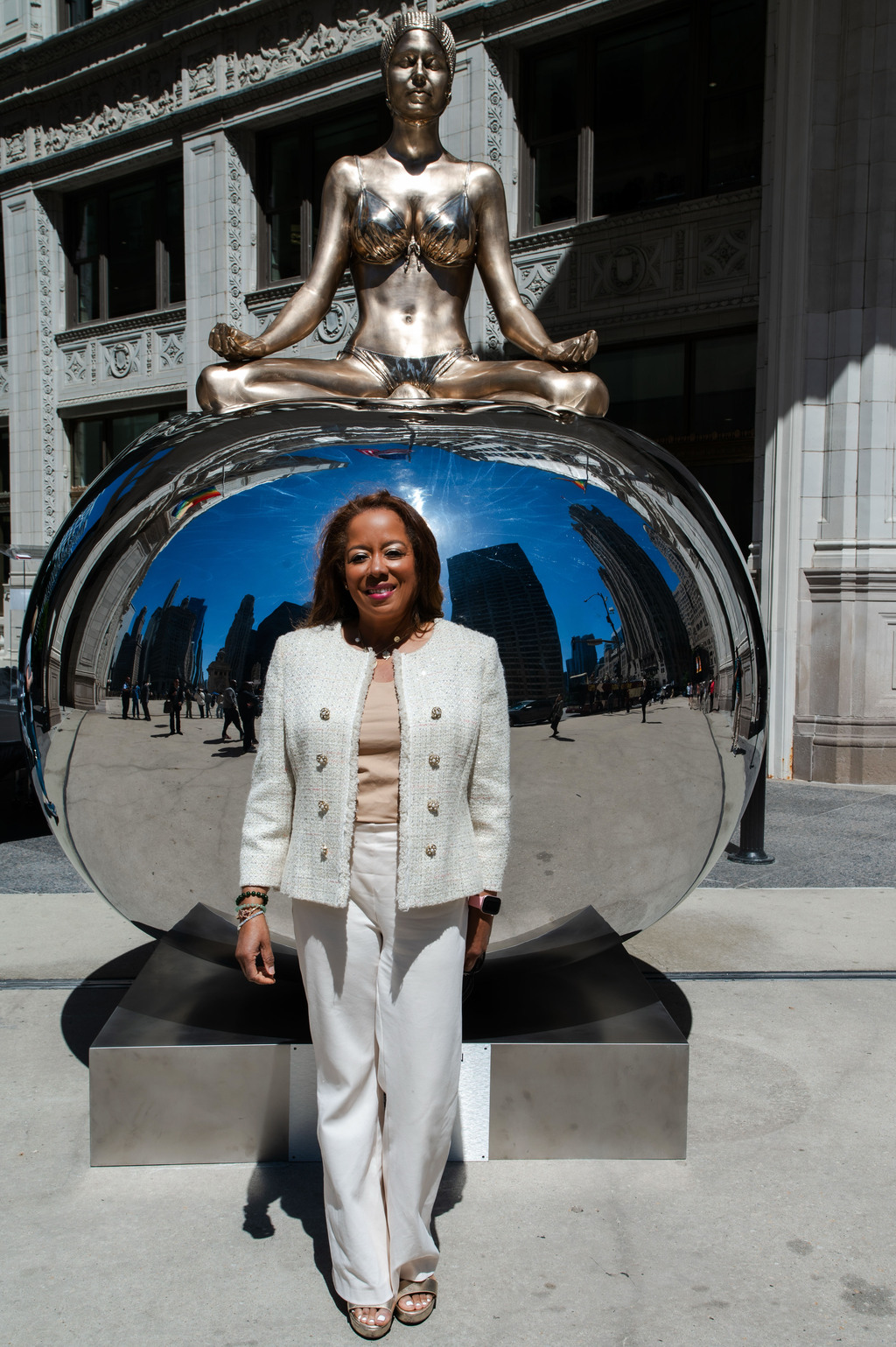
Illinois State Representative Kimberly Du Buclet